As is usual at conferences such as the BC Natural Resources Forum held in Prince George in January, governments of all levels and representatives of industry have the chance to meet informally and discuss ideas.
One of these ideas came out of discussions between Canadian Association of Petroleum Producers representatives and the Peace River Regional District.
In a letter following up on BCNRF conversations, CAPP’s Senior Advisor, BC Policy and Outreach, Derek Cummings suggested four resolutions that the PRRD might be interested in sponsoring. The resolutions were also sent to municipalities in the region, including Fort St. John, Dawson Creek, Hudson’s Hope and Pouce Coupe.
All four communities were looking at the proposed resolutions individually, Fort St. John city council had already discussed them at the February 24 meeting and were prepared to put them forward.
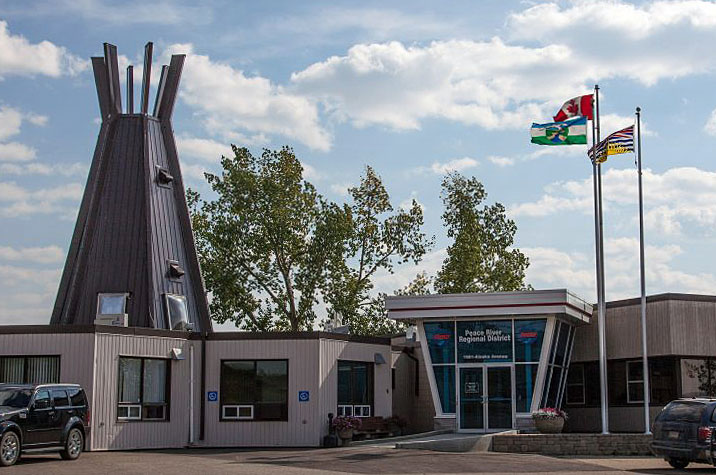
At the PRRD’s March 6 regular board meeting, directors discussed the resolutions and how best to proceed to get the most support from member municipalities and the North Central Local Government Association (NCLGA) when submitted resolutions come up for discussion.
Area C Director Brad Sperling said that the easiest way is for the Regional District to put the four resolutions together and have member municipalities and other areas support it.
Tumbler Ridge director Darryl Krakowka agreed. “[This] gives us an opportunity to get it out to all the communities and see if they will also support it.”
CAPP’s proposed resolutions are as follows:
1. Natural Gas and LNG Strategy
WHEREAS the global energy landscape is rapidly evolving due to geopolitical shifts that are redefining energy security, trade, and competitiveness for decades to come; and WHEREAS British Columbia must position itself as a leader in responsible natural gas development to attract investment, create jobs, and strengthen its role as a secure supplier of low-emission LNG; THEREFORE BE IT RESOLVED that NCLGA and UBCM urge the Provincial Government to develop an integrated natural gas value-chain and export strategy to strengthen infrastructure and policies that support the entire value chain—from upstream production to processing and export.
2. Efficient Resource Permitting
WHEREAS land-use uncertainty, cumulative effects policies, and lengthy permitting timelines delay resource projects, discourage investment, and limit economic opportunities for communities across British Columbia; and WHEREAS an efficient and predictable permitting process is necessary to support responsible resource development while ensuring certainty for communities and industry; THEREFORE BE IT RESOLVED that NCLGA and UBCM urge the Provincial Government to streamline land use and permitting processes by ensuring timely decision-making, aligning cumulative effects policies with economic priorities, and providing long-term regulatory certainty.
3. Industrial Electrification Expansion
WHEREAS electrification of industrial operations presents an opportunity to help meet B.C.’s climate objectives and grow British Columbia’s resource sectors; and WHEREAS inadequate grid capacity, slow interconnection processes, and high industrial power rates are major barriers to electrification, delaying projects and increasing costs; THEREFORE BE IT RESOLVED that NCLGA and UBCM urge the Provincial Government to expand grid capacity, streamline interconnection processes, and ensure competitive industrial power rates to support industrial electrification.
4. Balanced Emissions Policies
WHEREAS British Columbia’s natural gas sector has taken significant actions to address emissions, including a 47% reduction in methane emissions from 2014 to 2021, while continuing to grow production and economic contributions; and WHEREAS a sectoral emissions cap would restrict upstream natural gas production, discourage investment, and shift development to jurisdictions with weaker environmental regulations, resulting in job losses and no meaningful net reduction in global emissions; THEREFORE BE IT RESOLVED that NCLGA and UBCM urge the Provincial Government to not implement a sectoral emissions cap and instead collaborate with industry to develop balanced, competitive emissions policies that support investment while maintaining environmental progress.
In response to questions about whether co-sponsoring would have more impact than letters of support, Fort St. John director and the PRRD’s NCLGA representative, Tony Zabinsky said that a letter of support has the same impact as sponsoring, and the municipalities that send in letters of support also have the right to speak in favour of the resolutions when they hit the floor during NCLGA.
“The strength comes if we can recommend them from our region,” said Zabinsky.
If individual municipalities send in the resolutions, they’ll be seen as specific to the individual communities. This way it becomes a regional issue.
With the March 14 deadline to submit resolutions approaching fast, the board decided to proceed with Sperling and Zabinsky’s suggestions, and the additional suggestion to replace references to fossil fuels with natural resources.
The board voted unanimously in favour:
“THAT the Regional District support all four resolutions and send notice to all Regional District member municipalities requesting they send letters of support for these resolutions to NCLGA.”

Have an insight or additional info regarding this article? Feel free to drop a comment!