Through CleanBC, the provincial government has set ambitious electrification and climate-saving goals for British Columbia. Is it enough to meet projected demand and the emissions reductions targets?
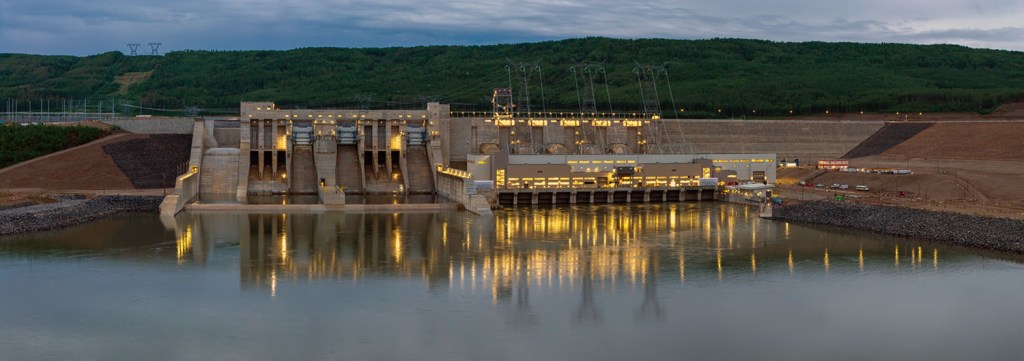
Over the last two months, BC Hydro’s Site C hydro-electric dam project on the Peace River near Fort St. John has passed its two final milestones and is now fully operational.
In July, the fifth generating unit at the dam was successfully commissioned and brought online, and BC Hydro officials expected the sixth and final unit to be up and running by the fall. The remaining construction work on the dam includes completing the powerhouse and generating station, paving access roads, and final equipment commissioning.
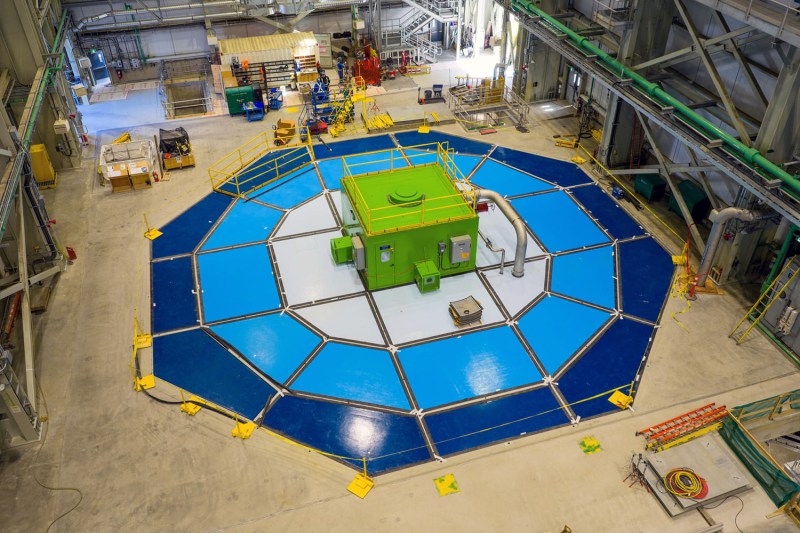
On August 9, BC Hydro announced that the final unit had been successfully commissioned, and the project is now capable of generating more than 1,100 megawatts (MW) of electricity, enough to provide reliable power to approximately 500,000 homes or 1.7 million EV’s. This addition represents an increase to the province’s electricity supply of about eight percent.
Each generating unit, capable of producing 180 MW of electricity, enough to power over 80,000 homes, according to BC Hydro. The units were brought online gradually, beginning in October 2024, with subsequent units coming online in December, February, March and the final two this summer.
Provincial Energy and Climate Solutions Minister Adrian Dix expressed his appreciation for the work of the “thousands of people who worked on Site C over the past decade,” adding that because of their hard work, “generations of British Columbians will benefit from reliable and affordable clean electricity.”
Charlotte Mitha, BC Hydro’s president and CEO said in the press release announcing the commissioning of the sixth generating unit, “Now that Site C is in full operation, it will serve our customers for the next 100 years and play a critical role in ensuring a stable and reliable electricity system.”
With the demand for electricity in British Columbia increasing, reliability and stability in the system are key to meeting the province’s future needs.
Govt Policies Fuel Surge in Demand
Prior to approving the project, electricity demand in British Columbia had stabilized by the early 2010s. Site C was seen as part of a larger plan to make the province self-sufficient in electricity by 2016, and potentially as a net exporter to markets such as the United States and Alberta. As a result of provincial policies such as 2007’s BC Energy Plan, followed by the Clean Energy Act in 2010. Profits from these exports were seen as a way to keep rates low and capitalize on trade opportunities.
At that time, growth in demand for electricity in the province remained modest, at approximately 5-10 percent, mainly driven by population increases and the demands of industry.
But now, following the implementation of 2018’s CleanBC and 2021’s CleanBC’s Roadmap to 2030, and the subsequent demands placed on the system by the electrification of major industrial projects like LNG Canada, the pushing of heat pumps and electric vehicles to meet the net-zero requirements, the projected demand has increased to 15-20 percent by 2030. Or as much as 40 percent by 2040 if full electrification is achieved.
“We’re doubling down on renewable power, expanding our grid and supporting First Nations leadership in energy development.”
Adrian Dix, Minister of Energy and Climate Solutions
Site C will increase BC Hydro’s electricity supply by only eight percent. In recent years, BC has become a net importer of electricity, importing approximately 25 percent of the electricity needed to meet current demand from the US and Alberta.
In 2024, BC imported 13,600 gigawatt hours of electricity. Site C will produce less than half that, 5,100 gigawatt hours annually.
Also in 2024, BC Hydro put out a call for power, seeking “clean electricity” projects such as wind and solar, to supplement the province’s future needs. Ten projects were awarded electricity purchase agreements (EPA) – nine wind and one solar, spread throughout the province. They’re anticipated to generate approximately 4,830 gigawatt hours of electricity, according to BC Hydro, boosting supply by another eight percent when they come online in 2031-2032.
Doubling Down: Calls for More Power
BC Hydro’s second Call for Power, announced on July 28, is a repeat of the 2024 call, and seeks up to 5,000 GWh additional “clean or renewable,” to meet its forecasted 15 percent increase in demand over the next decade.
Driving the projected increase are the same factors that have driven demand since 2020, population growth, electrification of industry, zero-emission vehicle mandates, and CleanBC’s climate requirements.
“We’re doubling down on renewable power, expanding our grid and supporting First Nations leadership in energy development, all while helping communities and businesses access the clean electricity they need to grow,” said Dix when the new call for power was announced.
Besides the two calls for power, which BC Hydro aims to repeat every two years, in June it launched two requests for expressions of interest (RFEOI) to expand BC’s clean-energy resources and advance efficiency, according to the Ministry of Energy and Climate Solutions press release.
The first RFEOI’s focus is on expanding long-term capacity to meet peak electricity demand. BC Hydro is seeking capacity and baseload energy projects, including geothermal and hydroelectric resources. These capacity and baseload projects would be ones that will reliably deliver firm power and provide backup for the intermittent energy provided by the projects in the two calls for power.
Ministry of Energy and Climate Solutions says that targeting innovation in energy efficiency through market ready technologies to help conserve energy in homes and buildings, is the focus of the second RFEOI. BC Hydro is looking to collaborate with industry leaders and organizations to help British Columbians save energy and lower costs.
These initiatives, along with the two calls for power, are part of the Clean Power Action Plan, which aims to “strengthen energy security, enhance system resilience and accelerate the transition to clean power.”
Environmental Assessment and Regulation
After the projects were awarded EPAs in January, the provincial government passed legislation – Bill 14, the Renewable Energy Projects (Streamlined Permitting) Act – in May, exempting the nine wind farm projects from the Environment Assessment process which all other industrial projects in the province are subject to.
While the Act didn’t specifically apply to all future wind projects, the Ministry says that it “does give government the ability to exempt future wind-power projects.”
Any windfarms in the next group of projects to be awarded EPAs as a result of the most recent call for power, may also end up being exempt from the EA process, likely increasing concerns among regional districts and First Nations about the impact these projects will have on the environment.
First Nations, landowners and local governments are all concerned about the impact the lack of consultation and environmental oversight will have on their rights, lands and communities. The Peace River Regional District and Doig River First Nations spoke out about their concerns.
However, solar projects with a capacity equal to over 50 MW will still requirement an assessment by the BC Environmental Assessment Office.
The Act also aims to “streamline” the regulatory process for renewable energy projects by turning the regulation of such projects over the BC Energy Regulator (BCER). That body is currently developing its processes for regulation of renewable energy projects.
Like Bill 14, another piece of legislation designed to streamline the project approval process, Bill 15, the Infrastructure Projects Act, gives the government the power streamline infrastructure projects that Premier David Eby deemed “provincially significant”, citing the need to counter economic challenges posed by US President Donald Trump.
All for Naught?
While the BC government doubles down on renewable energy projects, zero-emission vehicle (ZEV) mandates, heat pumps and its desire to keep oil and natural gas in the ground, it put out a report that shows it won’t meet the self-imposed targets.
From the 2024 Climate Change Accountability report:
B.C.’s current policy landscape does not put us on track to meet our 2030 targets. However, we are reducing emissions intensity as we grow a cleaner economy. CleanBC measures, such as the zero-carbon building code, biofuel blending and heat-pump adoption, will support additional emissions reductions by 2030 and beyond.
Yet, the province cancelled the EV rebates, which made the vehicles somewhat affordable. Vehicle manufacturers are turning away from building EV’s, because most consumers don’t want them.
To top it off, British Columbia doesn’t have the infrastructure for the government’s massive electrification plan, especially in the North. There’s little in the way of BC Hydro transmission infrastructure up the Alaska Highway. For example, EV chargers at Pink Mountain are powered by diesel generators.
The zero-carbon building code won’t take effect until 2030. The additional, intermittent power provided by the wind farms, won’t be available until at least 2031, and the firm power of the back-up RFEOIs likely won’t be available until much later.
Meanwhile, the countries that are doing most of the polluting show little signs of changing their ways.
At best, Canada and British Columbia’s contribution to levels of carbon dioxide (CO2) and greenhouse gas (GHG) emissions is negligible.
BC’s share of global emissions is 0.12 percent or 9.1 percent of Canada’s emissions with lower per capita emissions (CO2e) than the national average – 11.6 tonnes CO2e vs 17.7 tonnes CO2e. According to the provincial inventory, BC’s gross GHG emissions in 2024 had increased only 0.1 percent since 2007, up to 65.6 million tonnes of carbon dioxide equivalent (Mt CO2e) from 65.5 Mt CO2e.
Is Dix’s zeal enough to make the government’s wish for BC to become “the economic engine of Canada’s new economy, [whose] engine will be powered by abundant clean electricity,” come true?

Have an insight or additional info regarding this article? Feel free to drop a comment!