CleanBC is working, say the authors of the review, Rising to the Moment of British Columbia’s climate plan, urging the government to renew, not retreat from its climate plan, despite indicators that its targets are unreachable.
Launched in May this year, the independent panel engaged to review CleanBC met with some 150 organizations, received 279 written submissions, received over 2600 completed engagement surveys, engaged with Indigenous peoples and the BC government’s Climate Solutions Council.
“That feedback came from every corner of this province,” said Merran Smith one of the authors of the report and the founder of Clean Energy Canada, who also serves on the Climate Solutions Council.
“Here’s the key findings out of it [the report],” Smith said at the press conference announcing the release of the report. “CleanBC is working and what’s needed is a renewal, not a retreat from CleanBC.”
Smith noted that during the review people felt that BC won’t meet its targets. Smith pointed out the few successes of the CleanBC policy:
- Gas production in BC is up 60 percent since 2014. Methane emissions are down 60 percent.
- In 2024, six billion litres of biofuels were in the system being burned in transportation, reducing emissions by four megatonnes (Mt).
- “In 2023, more heat pumps were delivered to British Columbia than gas furnaces.
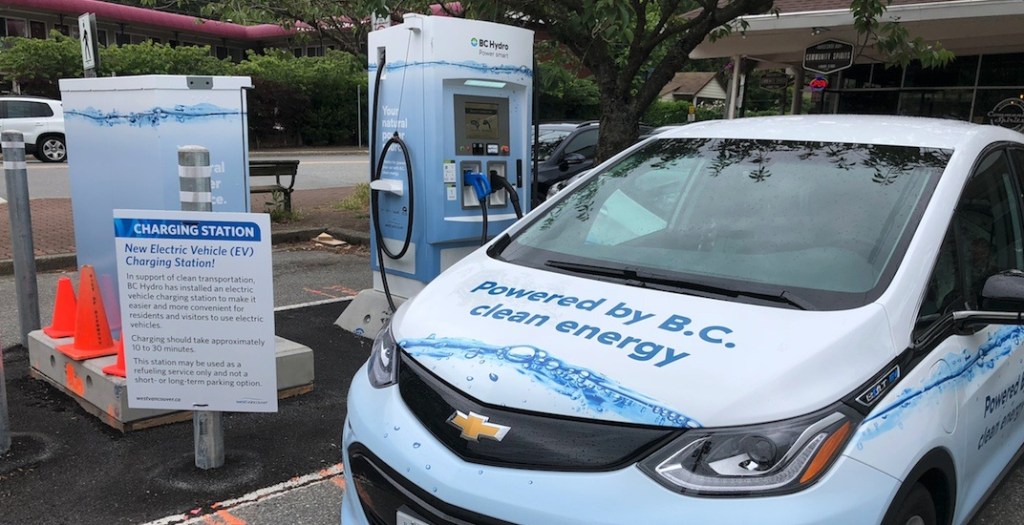
- The EV mandate was set to have 220,000 electric vehicles on the road by the end of 2025. BC hit that target in July 2025.
“So, these policies are working,” Smith said. “Some of them take time and our advice is really to extend and strengthen some of these ones that are working. They’re in place. This is the easiest thing for the government to do. No need to spend time developing new legislation, new regulations. Use what we’ve got and that business has adapted to.”
Some of the policies need to be “calibrated” for regional fairness, Smith said, because one-size doesn’t fit all, a big province with marked variations in temperature.
The zero-emission building code is one of the policies in CleanBC that needs “calibration”. For example, she suggested taking off the top level of the Step Code and make it voluntary in communities in the North like Fort St. John and Dawson Creek “to address some affordability concerns.”
Another policy that needs “calibrating” according to Smith, is the zero-emission vehicle mandate.
“Getting rid of the ICE ban, the ban on gas vehicles in 2035 and reducing the goals for 2030,” she said. “But we are very clear that we need to keep that made in British Columbia zero-emission vehicle mandate. That has actually been very successful in ensuring that there’s choice for those who want electric vehicles.”
She reiterated that government needs to make sure they’re not sticking to a one-size-fits-all approach to their policies.
However, these concessions to flexibility are not enough for some like Peace River South MLA and Conservative Critic for Oil, Gas and LNG Larry Neufeld. He says that CleanBC is crushing families and workers in communities like Dawson Creek.
BC’s Conservative opposition believes that the review ignores the plan’s “overwhelming economic harm and must be scrapped entirely,” according to a statement issued on November 26.
“Costs are rising, investment is fleeing, and industries that built this province are being regulated into decline,” Neufeld said in the statement. “Calling this a review is dishonest. The only responsible path is to scrap CleanBC and start over.”
Citing the Independent Contractors and Business Association’s (ICBA) submission to the CleanBC Review Panel, Neufeld and MLA Sheldon Clare, Conservative Environment Critic, wrote that construction, natural gas, forestry, mining, manufacturing, transportation and housing are suffering severe impacts, which are being felt in mill closures, cancelled projects and shrinking employment opportunities.
“People are losing work, losing income and losing confidence in the future,” Clare said. “CleanBC is not a climate plan. It is an economic chokehold.”
The Conservatives are calling for CleanBC to be scrapped and replaced with a practical climate initiative that combines protecting the environment with growing the economy, attracting investment, and strengthening energy security.
“CleanBC is doing the opposite. It’s time to scrap it,” Clare said.
According to an article accompanying the ICBA’s submission, CleanBC will impose over $109.7 billion in lost Gross Domestic Product by 2029, two-and-a-half times greater than United States tariffs.
“In our submission, we make the case for climate policies that reduce emissions without sacrificing affordability, investment or competitiveness. We support innovation and a lower-carbon future – but it must be achieved in a way that allows our economy to grow, not shrink.”
BC Conservatives and the ICBA are not the only ones concerned about the CleanBC review. Clean Energy Canada has also expressed concern, but for very different reasons.
In a press release on November 26, Rachel Doran, executive director for Clean Energy Canada, said that since the CleanBC plan was created, climate-change caused emissions have declined by approximately 9 percent in British Columbia.
While Doran praised the panel’s recommendation to renew rather than retreat from CleanBC’s policies, she called-out the plan’s focus on “near-term emissions reductions as its metric of success,” and urged the government to measure its future success through tangible actions with real savings for British Columbians.
Using emissions reductions as a measure of the plan’s success has made sense and ensured accountability, she said, but “it is ultimately the deployment and adoption of transformative climate solutions – from EVs and heat pumps to wind turbines and a smarter electricity grid – that will make a net-zero future possible.”
Doran said the next phase of CleanBC should pair ambitious, but achievable targets with new progress indicators which focus on the delivery and benefits of climate solutions.
She also noted that BC Hydro’s Integrated Resource Plan would leave BC short of power if the various proposed “nation-building projects” go ahead.
“Reducing British Columbians’ energy bills is central to the panel’s recommendations, and benefitting households should always be a priority use of our electricity.”
In the last month, the province has come out with the Integrated Resource Plan for BC’s electricity system; Look West, a new economic vision; and the review of CleanBC, each setting out different versions for the future of the province.
Doran said, “Acting on the panel’s recommendations would help send a clear signal that electrification and climate action are at the heart of securing a more affordable and competitive BC.”
Energy Minister Adrian Dix feels that time is of the essence when it comes to addressing climate issues in the province.
“The moment is urgent,” Dix said. “The moment is urgent for people in their daily lives on affordability, the moment is urgent for our economy, and the moment is urgent to reduce emissions and ensure that CleanBC does what it needs to do to encourage all three of those things.”

Have an insight or additional info regarding this article? Feel free to drop a comment!